Tailoring your resume means aligning your real experience with the job's requirements, not fabricating skills. A tailored resume shows the hiring manager exactly why you fit this role, not just any role. This guide walks you through how to tailor your resume to a job description honestly and effectively, step by step.
Key takeaways
Tailoring is about matching your existing skills and achievements to the job description, not inventing new ones.
Use a step-by-step process to analyze the job ad and map your experience.
A final checklist ensures you've covered keywords, skills, and relevance without misrepresentation.
Why tailoring matters (and why honesty is non-negotiable)
When you tailor your resume to a job description, make your relevant evidence easier to find. Read the requirements, identify work you have actually done that relates to them, and move that evidence into a clear position. A useful edit changes emphasis while preserving the underlying facts.
Start with the summary, skills section and most relevant roles. Reorder bullets where it helps the reader understand your experience. Keep historical job titles, employment dates and responsibility levels accurate. An aspiration belongs in a career goal or learning plan, not in a list of completed achievements.
Use the employer's terminology when it accurately describes your work. If the advert asks for project coordination and you coordinated handoffs, explain those handoffs. If it asks for project ownership and you assisted the owner, preserve that distinction. Clear relevance is more useful than an inflated claim.
Step by step: map the job requirements to your evidence
Read the role for requirements, not just keywords. Separate mandatory qualifications from preferences and note the responsibilities you would perform. Keep the original posting beside your draft.
Create an evidence inventory. For each relevant role or project, note what you did, the tools you used, who you worked with and any outcomes you can support. Treat missing measurements as missing information.
Map requirements to evidence. Mark each requirement as directly demonstrated, supported by transferable experience, or a genuine gap. Write down the specific example that supports each match.
Edit the summary and skills section. Lead with experience relevant to this role. Include named tools and qualifications only when accurate; keep learning goals distinct from established skills.
Reorder and clarify experience bullets. Put relevant evidence first and use precise verbs that reflect your responsibility. Keep actual employment titles, dates and scope intact.
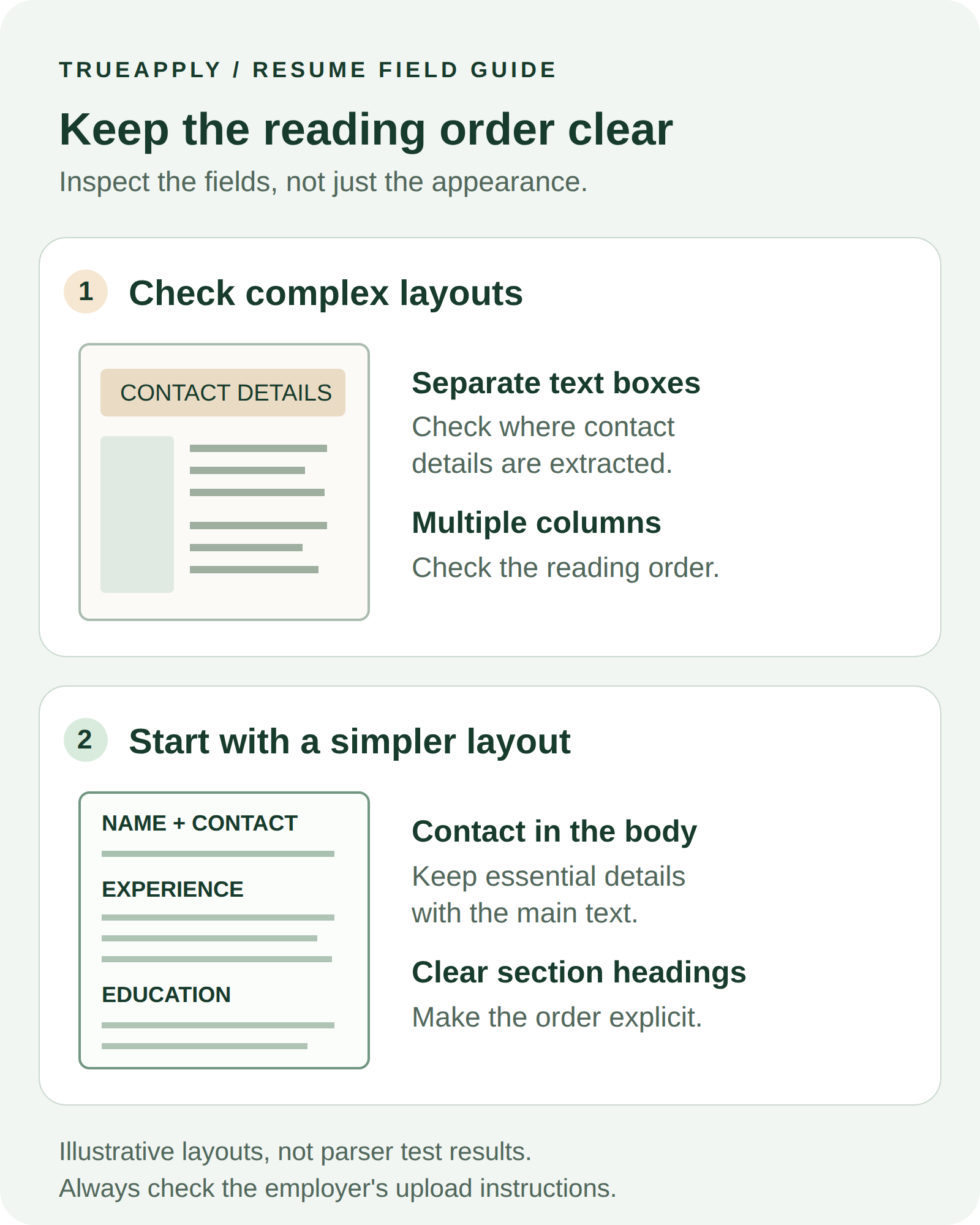
Review the gaps and exported document. Decide whether missing mandatory requirements make the role unsuitable. Reopen the PDF or DOCX, check the text and extracted fields, and verify each changed claim against your source notes.
Before and after: Tailoring a resume bullet
Hypothetical example: a candidate coordinated project handoffs between design and engineering, tracked dependencies and escalated blockers. The target role asks for cross-functional coordination. Those are the only facts supplied for this example.
Before: “Helped with projects.”
After: “Coordinated design and engineering handoffs, tracked dependencies and escalated blockers.”
The revised bullet names the relevant work already present in the evidence. It adds no team size, budget, seniority or performance claim. If the candidate had only attended handoff meetings, this revision would overstate their role. The wording must follow what happened.
For a separate guide to describing scope when measurements are unavailable, read resume bullet points without metrics.
Separate direct evidence, transferable skills and genuine gaps
Direct evidence: you have performed the responsibility the job describes. Explain the work with the relevant context and accurate scope.
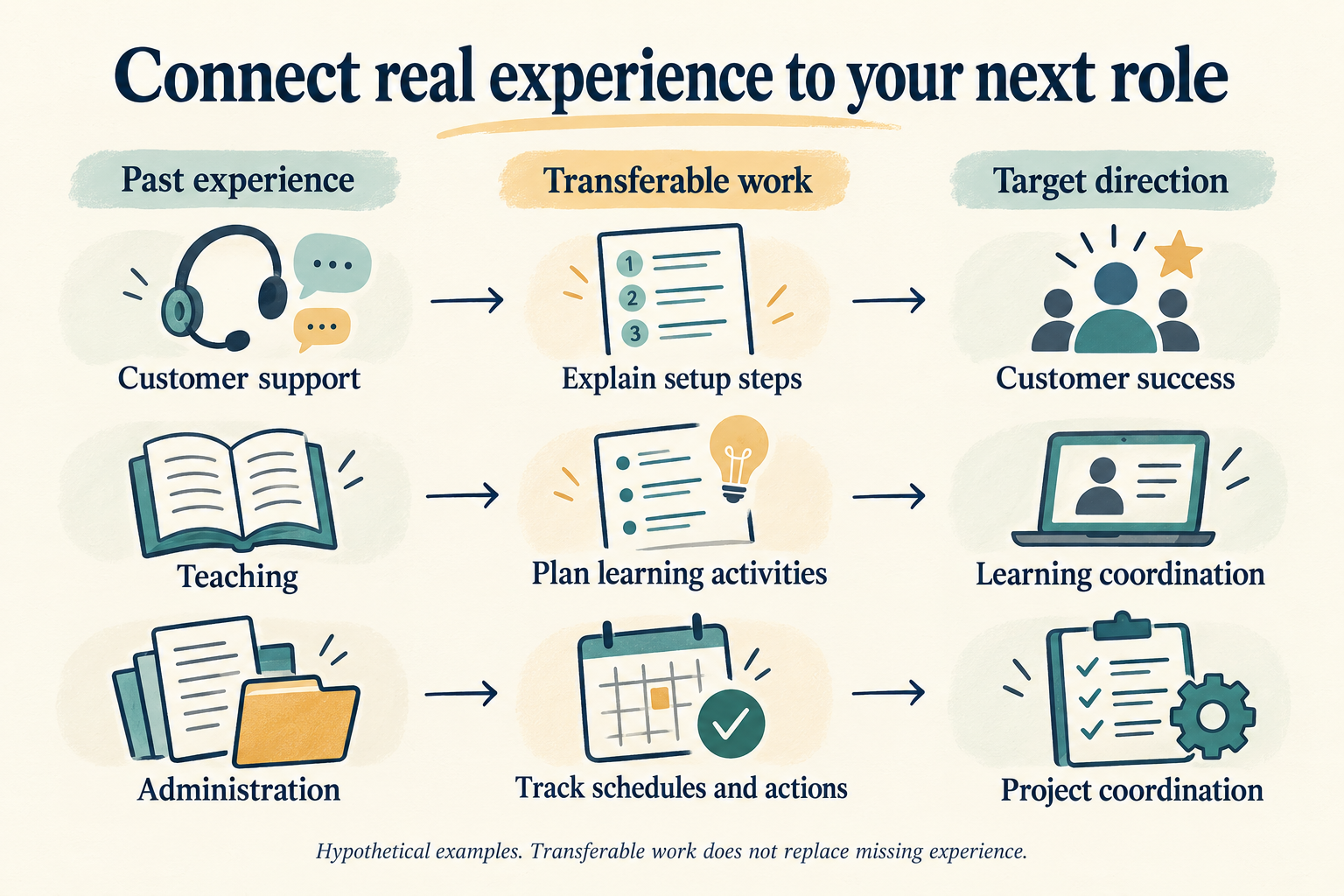
Transferable experience: you have related experience that may apply in a new setting. In a hypothetical example, coordinating a volunteer committee could demonstrate scheduling and communication, but it would not establish experience managing a product team. Name the setting so the reader can assess the connection.
Genuine gap: you cannot support the requirement from your experience. Reordering bullets cannot create a qualification you do not hold. Keep the gap visible in your working notes and decide whether to apply, build the skill, or pursue a different role.
Choose verbs carefully. “Coordinated” and “led” describe different responsibilities; “assisted” and “owned” are not interchangeable. Preserve the level of responsibility your evidence supports. Compress less relevant experience if necessary, while keeping enough context for an accurate career timeline.
Common mistakes to avoid when tailoring
Avoid copying a requirement into your skills section just because it appears in the advert. If you have not used a tool, do not present it as established experience. Describe genuine related work instead, or keep it in your gap list.
Keep historical titles and dates intact. You can clarify a role in the summary, but replacing an actual title with the target title changes the employment record. Similarly, do not turn assistance into ownership or add a result you cannot explain.
Treat automated matching scores as prompts for review rather than hiring promises. Check the underlying requirements and your evidence instead of adding phrases solely to raise a score. If measurements are unavailable, use specific descriptions of work rather than invented metrics.
Final review checklist for a tailored resume
Use this checklist before you apply:
- Evidence: can you explain the source of every edited skill, responsibility and result?
- Accuracy: do titles, dates, qualifications and responsibility levels match your actual history?
- Relevance: is the most useful evidence easy to find in the summary and relevant roles?
- Language: does each borrowed job-description term accurately describe your work?
- Gaps: have you kept missing mandatory qualifications separate from strengths?
- Export: have you reopened the final document and checked its visible text and extracted fields?
For the final document check, use ATS resume formatting: check what the parser actually reads. Parsing and relevance are separate checks: readable fields do not establish that you meet a role's requirements.
Frequently asked questions about tailoring your resume
Can I tailor my resume without lying?
Yes. Tailoring means selecting and emphasizing your true experiences that match the job, not inventing new ones. You can reorder bullets, adjust wording to mirror the job's language, and highlight relevant achievements while keeping every claim factual.
How do I handle a lack of required experience?
Be honest about the gap. Emphasize adjacent experience and transferable skills that show you can learn quickly. If the requirement is truly mandatory and you lack it, consider whether this role is the right fit before applying.
Should I use the exact keywords from the job description?
Use the job description's exact keywords when they accurately describe your skills, but don't force them in. Mirror the language naturally in your bullets and summary, and avoid keyword stuffing that makes your resume unreadable.